The Geometry Nobody Designed
In the 1860s, Japanese engineers built a fort in Hokkaido that looks, from above, like a perfect snowflake. Every winter now, tourists walk through it under thousands of lights strung between the earthworks. There are food stalls and families and cherry trees that bloom in April. It is one of the more beautiful parks in Japan.
Nobody designed it to be a park. Nobody designed it to be beautiful, either.
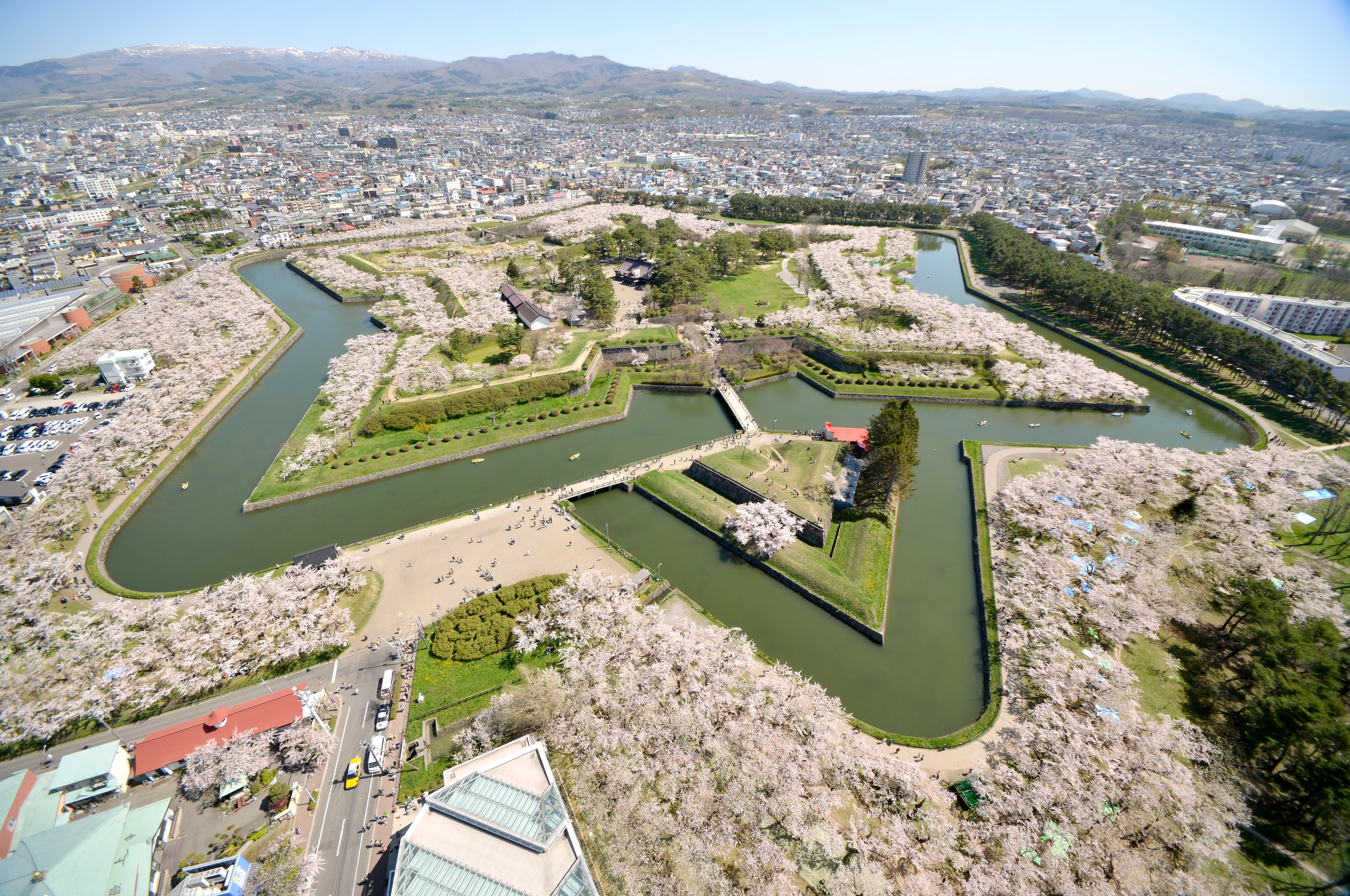 Fort Goryokaku, Hakodate, Japan. Built 1857 to 1866. Now a public park. The moat fills with fallen petals every April. Photo by Goryokaku-Tower, CC BY 4.0.

The Problem That Made the Shape
In the 15th century, artillery changed warfare. A cannonball hits a straight stone wall and the wall shatters. European military engineers, faced with this problem, worked out a geometric solution over the next century and a half: angled bastions that deflect cannonballs rather than absorbing them, positioned so that every point of the outer wall falls within the field of fire from at least two other bastions. No defender has to stand where an attacker can approach from outside their line of sight. No angle is uncovered.
The constraints were tight: cannonball physics is not negotiable, stone construction has fixed properties, and the requirement that every approach be covered admits very few solutions. Solve it completely enough, and the shape falls out. The engineers weren’t optimizing for beauty. They were solving an engineering problem in a domain with clear rules, and solving it all the way.
The result was the star fort: pointed bastions radiating outward in a pattern that, from altitude, looks precisely like the kind of geometric figure you might design if you were trying to make something beautiful.
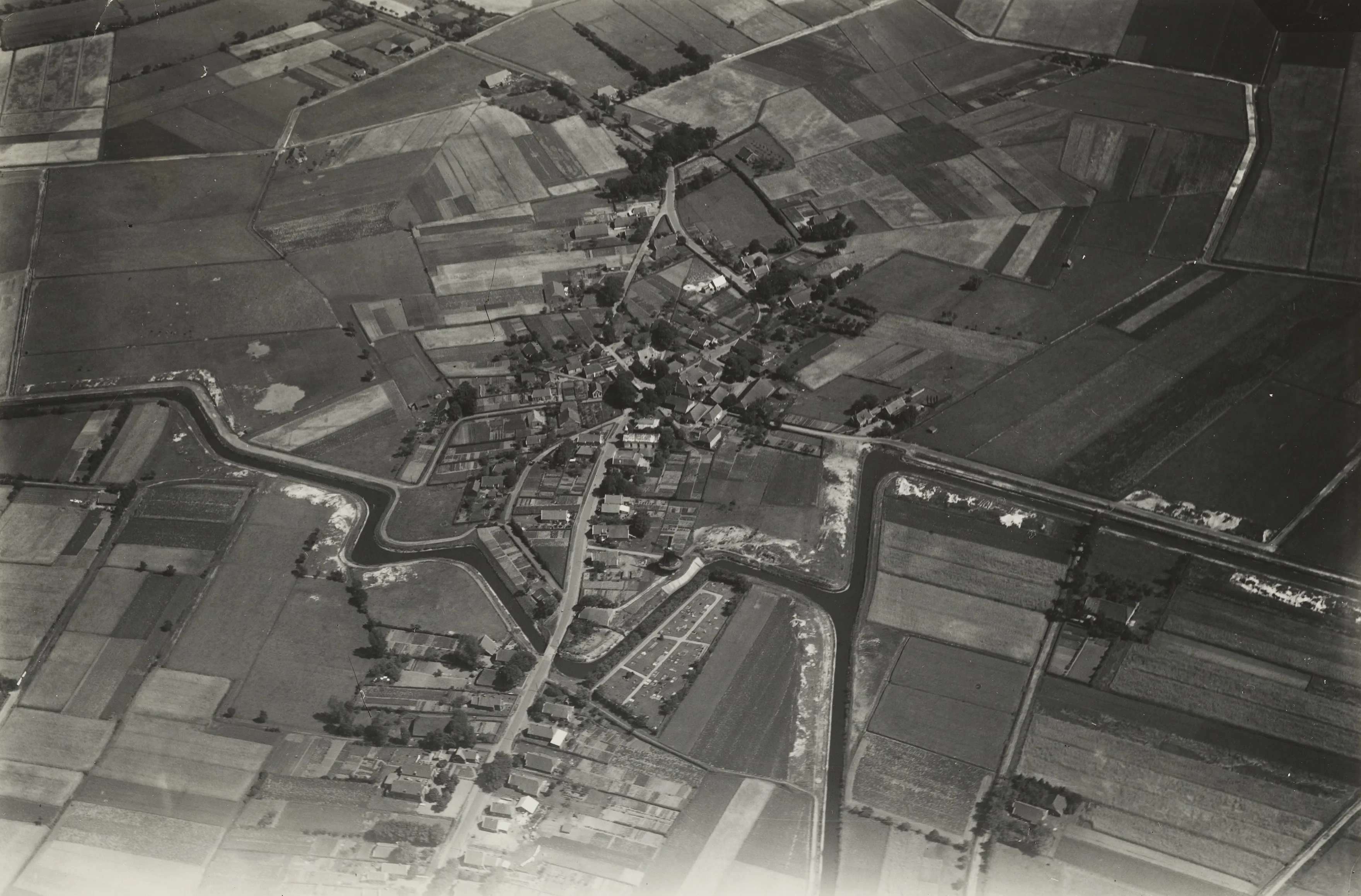 Bourtange, Groningen, Netherlands. Built 1593. The earthworks are original. Aerial photograph by Netherlands Institute for Military History, CC BY-SA 4.0.

Bourtange in the Netherlands, Palmanova in Italy (a UNESCO World Heritage Site), Fort Goryokaku in Japan: different countries, different centuries, the same shape. The geometry converged because the constraint converged. When you solve the same well-specified problem completely, you get the same answer.
What Happens When You Solve Everything
The star forts have company.
Bees build hexagonal cells. The hexagonal honeycomb is the most efficient way to tile a plane with equal-area cells while minimizing the total length of the walls between them. The bees don’t know this in any mathematical sense. The shape is the only solution to their problem, and they inherited it. Nobody designed hexagons. The constraint of packing is tight enough to select for them.
The nautilus shell grows by adding chambers. Each new chamber has to maintain structural proportion with the previous one, so the shell scales without changing shape. The logarithmic spiral is the only curve with this property, and it appears in things people have called beautiful across cultures for centuries. Not because beauty was the goal, but because the constraint was specific enough to admit only one form.
The pattern is consistent enough to be worth naming. When a domain is well-specified enough that the constraints narrow to a single solution, the solution often has formal properties that humans recognize as beautiful. The beauty isn’t an accident, but it isn’t the goal, either. It’s the shape of the constraint working all the way through.
Why They Became Parks
The star forts were rarely taken by assault. The geometry was too complete: every approach was covered, every angle overlapping, the kill zones precise. Attackers knew this and shifted to siege warfare instead. You starve the defenders out. This takes months, not days, and it changes the economics of conquest.
Because they were difficult to take by assault, many survived intact to the present. Bourtange still has its original earthworks. Palmanova is a living city. Fort Goryokaku became a public park in 1914, opened by the Meiji government once the earthworks had outlasted the wars they were built for.
The geometry that made them effective is exactly what made them survive long enough to become something else. The design that was too good to break became, by outlasting the problem it was built for, the thing that tourists visit today. The park came after the cannonball. The winter lights came after the field of fire.
This is a pattern worth noticing: structures that solve their original problem so completely that they have nothing left to break tend to outlast the problem itself and find new purposes in the ruins. The earthworks were built for war. They survive as gardens. The form persists while the function transforms.
A Heuristic Worth Having
There is a practical implication here, though it requires care in application.
In well-constrained domains, beauty is correlated with correctness, not because there is anything mystical connecting aesthetics to truth, but because the same thing produces both: tight constraints working all the way through to a unique solution. The star fort is beautiful and militarily correct for the same reason, which is that the cannonball physics didn’t leave room for anything else.
This suggests that in sufficiently constrained domains, you can use aesthetic elegance as a weak signal of whether a solution is complete. If a mathematical proof is beautiful in the sense that every step was the only step available, that formal property is evidence (not proof) that the argument isn’t leaving anything out. If an engineering solution has a clean geometric logic, that property correlates with whether all the constraints have been satisfied. The beauty isn’t the thing you’re checking for; it’s a side effect of the thing you’re checking for.
The caveat is essential: this only works in well-constrained domains. In unconstrained optimization, you get whatever the optimizer prefers, and preferences vary. The star fort geometry is necessary because cannonball physics is not negotiable. In a domain where the constraints are soft or incomplete, elegant form can produce confident-looking wrong answers.
The star forts are one case where the constraints were tight enough. The geometry appeared because it had to. And then it outlasted the problem and became something else: a park in Hokkaido, lit up for cherry blossom season, full of families eating food from stalls where the bastions used to be.
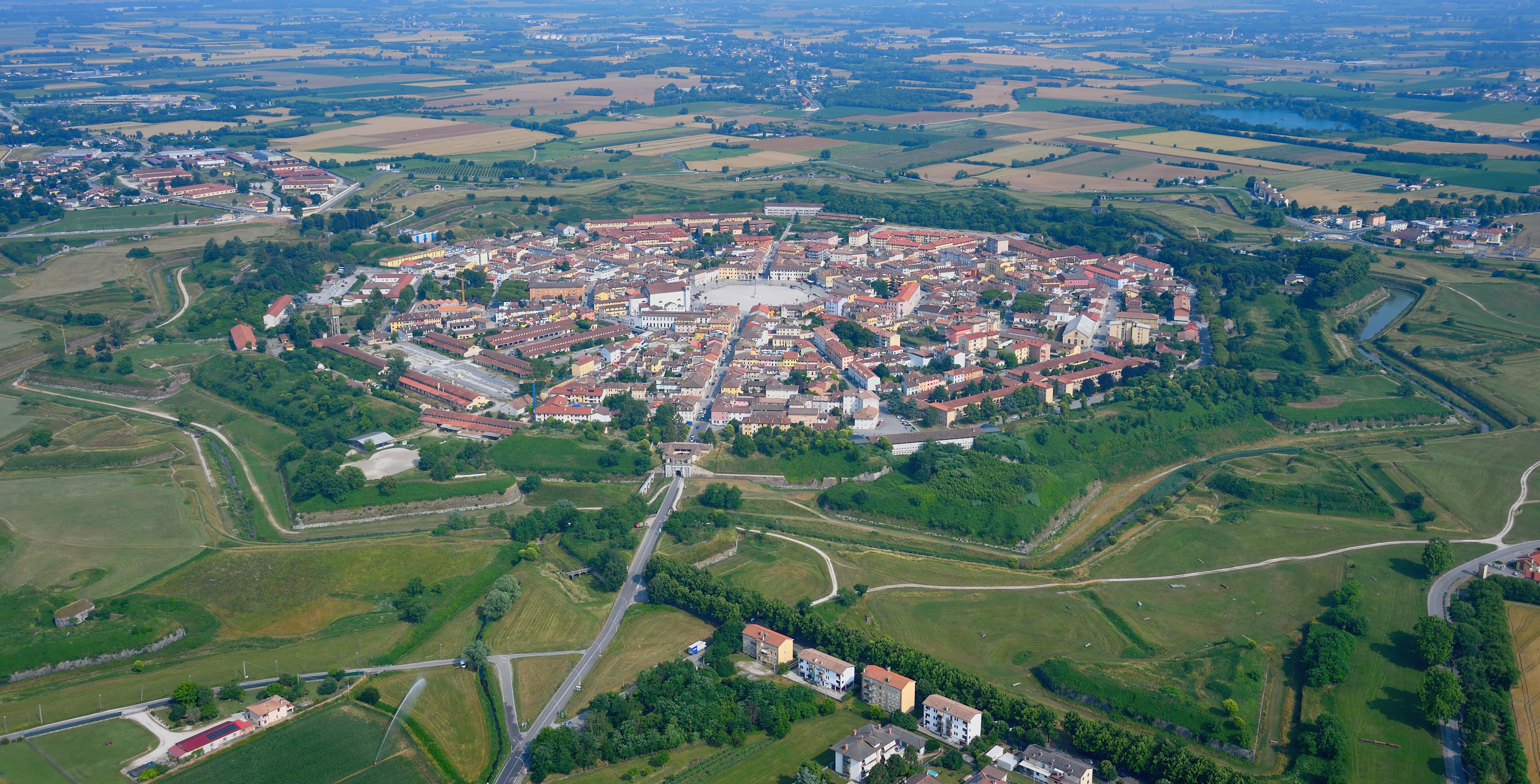 Palmanova, Italy. Built 1593. UNESCO World Heritage Site since 2017. The original nine-pointed star is still intact. Photo by Carsten Steger, CC BY-SA 4.0.
.jpg)
Fort Goryokaku hosts the Hakodate Cherry Blossom Festival every April, when the moat fills with fallen petals. The earthworks were built between 1857 and 1866, modeled on European star fort designs by engineer Takeda Ayasaburo. The Meiji government used it as a military installation until 1914, when it was opened as a public park. The shape has not changed.